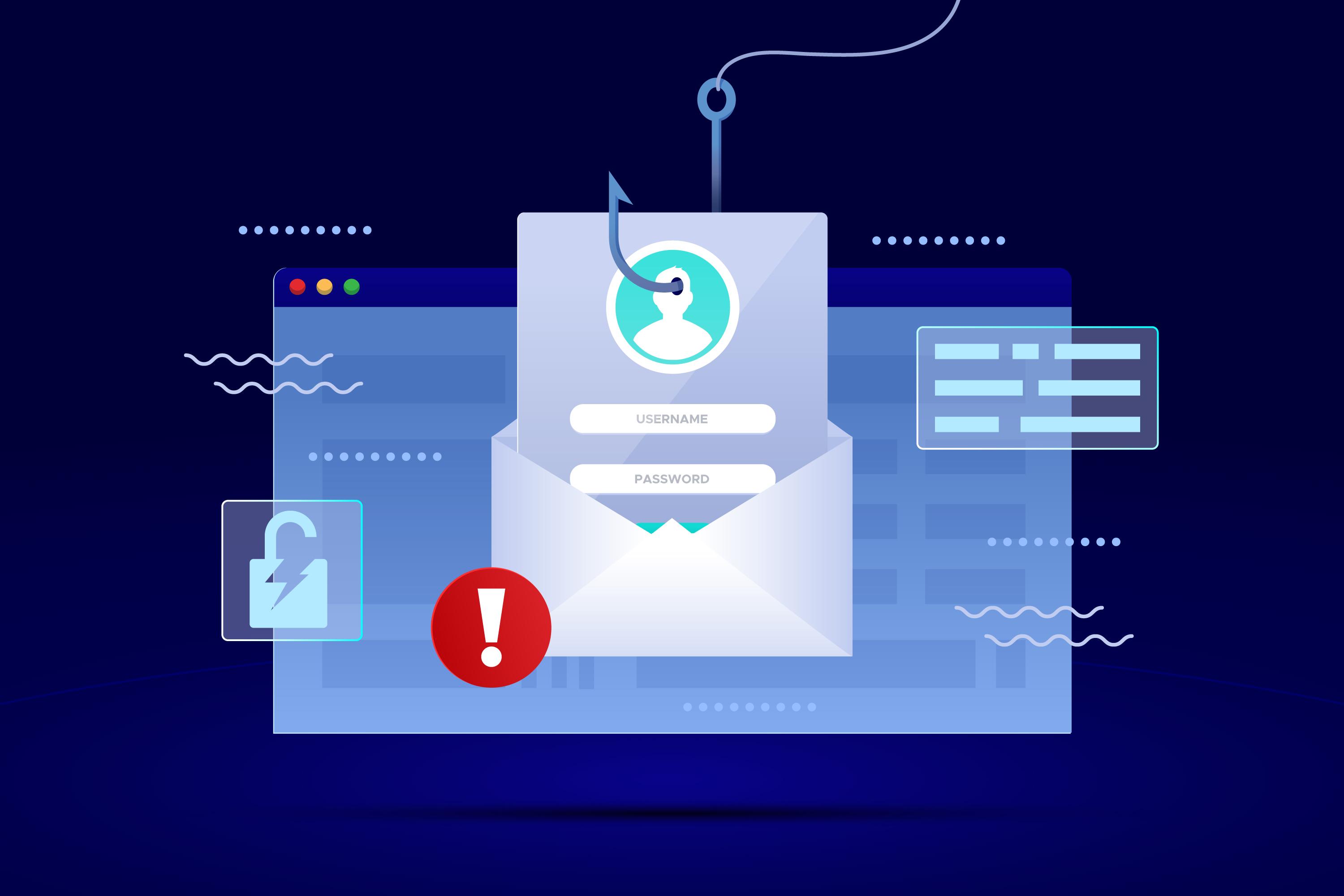
Phishing has always evolved alongside technology, but the pace of change in 2026 is unlike anything organizations have seen before. What was once a numbers game based on volume and crude deception has become a precision-driven discipline powered by artificial intelligence, automation, and real-world context.
For security teams, this shift has fundamentally changed how phishing risk must be understood and managed.
A New Era of Phishing
Traditional phishing relied on scale. Attackers sent millions of poorly written emails, hoping a small percentage of recipients would fall victim. Obvious spelling errors, generic greetings, and suspicious domains made many of these attempts relatively easy to detect for both users and technical controls.
In 2026, that model has largely disappeared. The latest phishing statistics tell a striking story.
Generative AI has lowered the technical skill required to produce highly convincing phishing content. Attackers can now generate polished, professional emails in seconds—emails that closely resemble legitimate business communications and adapt quickly to different targets.
The result is a threat landscape where phishing attempts are fewer in number, but significantly higher in quality.
How AI Has Changed the Attacker Playbook
AI-powered phishing does not simply improve grammar or tone. It enables attackers to simulate authenticity at a level that challenges long-standing security assumptions.
Modern phishing campaigns increasingly demonstrate the ability to:
- Match corporate writing styles and formatting
- Reference recent company events, policy changes, or news cycles
- Adapt language based on geography, industry, or role
- Iterate rapidly when a message fails to produce results
These capabilities allow phishing emails to blend seamlessly into normal business communication. For employees, the difference between a real internal message and a malicious one can be nearly indistinguishable at first glance.
Why Technical Controls Alone Are No Longer Enough
Email security gateways, reputation-based filtering, and automated analysis remain critical components of any security stack. However, their effectiveness is increasingly limited by the adaptability of modern phishing techniques.
When emails are sent from compromised legitimate accounts, reference real internal processes, or change content frequently, purely technical detection becomes significantly harder. Even advanced systems can struggle when there are no clear indicators of compromise.
This does not mean technical defenses are failing—it means they are being asked to solve a problem that now extends beyond technology alone.
The Human Layer Becomes the Primary Target
At its core, phishing is a human attack. No matter how sophisticated the infrastructure behind it, success still depends on how a person interprets and reacts to a message.
In 2026, attackers are explicitly designing phishing campaigns around predictable human behaviors:
- Urgency when responding to authority figures
- Habitual trust in familiar workflows
- Cognitive overload during busy work cycles
- Assumptions based on visual familiarity
These behaviors are not flaws; they are normal aspects of how people work. The challenge for organizations is recognizing that these behaviors can be measured, influenced, and improved over time.
Measuring Behavior Instead of Guessing Risk
One of the most important shifts in phishing defense is the move from theoretical risk to observable behavior. Instead of asking whether an employee could fall for a phishing attack, security teams can now examine how employees actually respond in realistic scenarios.
By running controlled simulations and observing actions such as clicking, submitting information, or reporting suspicious messages, organizations gain concrete insight into where risk truly exists.
This behavioral data provides a far more reliable foundation for decision-making than assumptions or one-time training exercises.
Why Awareness Training Needs to Change
Security awareness training has existed for years, but its effectiveness has varied widely. In many organizations, training is treated as a compliance requirement rather than a behavioral intervention.
Static presentations, annual checklists, and generic advice often fail to reflect the real-world complexity employees face in their inboxes. As phishing becomes more personalized and realistic, training must evolve accordingly.
Effective programs in 2026 focus on:
- Short, relevant learning moments
- Training triggered by real behavior, not schedules
- Reinforcement of positive actions such as reporting
- Continuous improvement rather than one-time completion
The goal is not to eliminate mistakes entirely, but to reduce their frequency and impact while increasing detection and reporting.
Reporting as a Security Signal
One of the most meaningful indicators of phishing resilience is not whether an employee clicked—but whether they recognized and reported a suspicious message.
In mature programs, reporting is treated as a positive outcome and a core metric of improvement. Encouraging employees to report suspicious emails, even when they are unsure, creates an early-warning system that benefits the entire organization.
Over time, higher reporting rates often correlate with faster incident response and reduced overall exposure to phishing attacks.
The Role of Consistency
Perhaps the most overlooked factor in phishing defense is consistency. Sporadic simulations or one-off training sessions rarely produce lasting change.
Organizations that see meaningful improvement tend to adopt a steady, repeatable approach—regular simulations, ongoing measurement, and incremental adjustments based on observed behavior.
This consistency allows employees to develop intuition rather than memorization, helping them recognize suspicious patterns even as tactics evolve.
What This Means for Organizations in 2026
Phishing in 2026 is not a problem that can be solved once and forgotten. It is a moving target shaped by advances in technology, changes in work patterns, and human psychology.
Organizations that treat phishing as a dynamic risk—one that can be measured, analyzed, and improved—are better equipped to adapt. Tracking a phishing resilience score over time provides the clearest view of that trajectory. Those that rely solely on static defenses or annual training are likely to fall behind as attacks continue to evolve.
The future of phishing defense lies at the intersection of technology, behavior, and continuous learning.
The Rise of Deepfakes and Multi-Channel Attacks
In 2026, phishing is no longer confined to the inbox. Attackers are increasingly using multi-channel social engineering to bypass security awareness. A common tactic involves a "pre-text" email generated by AI, followed by a deepfake voice call (vishing) or a text message (smishing) to confirm the request.
- Deepfake Voice (Vishing): Using just a few seconds of a CEO's voice from a public keynote or webinar, attackers can generate real-time audio that sounds identical to the executive. These calls are often used to authorize urgent wire transfers or sensitive data exports. For the behavioral defences that actually stop this category of attack, see our guide to training employees against deepfake voice and video impersonation.
- QR Code Phishing (Quishing): As more organizations use QR codes for MFA or internal documentation, attackers are embedding malicious links in codes that bypass traditional email filters which primarily scan text and attachments.
Actionable Defense Strategies for 2026
To stay ahead of AI-driven threats, organizations must shift from "detection" to "resilience." Here are the core strategies for the coming year:
- Context-Aware Simulations: Move away from generic templates. Use targeted phishing simulations that mimic the specific writing style and software used by your departments.
- Verified Communication Channels: Establish strict out-of-band verification processes for high-risk actions (like changing bank details or resetting admin passwords) that do not rely solely on email or voice.
- Gamified Resilience: Encourage a "reporting culture" where employees are rewarded for spotting and reporting threats. High reporting rates are often a better indicator of security health than low click rates.
- AI-Enhanced Monitoring: Use security tools that analyze communication patterns rather than just signatures. Sudden changes in tone or unusual request timing can be early indicators of a compromised account.
Looking Ahead
As AI continues to advance, phishing will remain one of the most effective tools in an attacker’s arsenal. The question is no longer whether phishing attempts will reach employees, but how organizations respond when they do.
By focusing on real behavior, reinforcing positive actions, and maintaining a consistent security culture, organizations can reduce human risk and build resilience against increasingly sophisticated social engineering attacks.
Related Reading
Ready to turn these insights into a strategy? Explore our guide on Human Risk Management: The Missing Layer in Your Cybersecurity Strategy, or dive deep into the specific threats of AI-Generated Phishing Emails and Vishing and Smishing Attacks.
For a visual overview of modern phishing tactics, see the FBI IC3 Internet Crime Report.
New to this topic? See our data primer: Phishing Statistics: Key Numbers Every Security Team Should Know
More from the Blog
View all blog articles
Best KnowBe4 Alternatives in 2026: How to Choose by Price, Setup, and SMB Fit
KnowBe4 leads the category, but it is built for large enterprises with dedicated security staff. Here is how the main alternatives compare on the dimensions that decide the purchase.
Cybersecurity Awareness for the UAE Healthcare Sector: Protecting Patient Data and Clinical Systems
UAE hospitals face ransomware, medical device attacks, and patient data breaches. Build a security awareness program that protects clinical staff, patient safety, and regulatory compliance.
Insider Threat Awareness Training: Building a Program That Protects Without Eroding Trust
Most insider incidents are accidental, not malicious. Learn how to build a program that addresses negligent insiders without creating a culture of suspicion.
Ready to stop phishing attacks?
Run realistic phishing simulations and high-impact security awareness training with PhishSkill's automated platform.