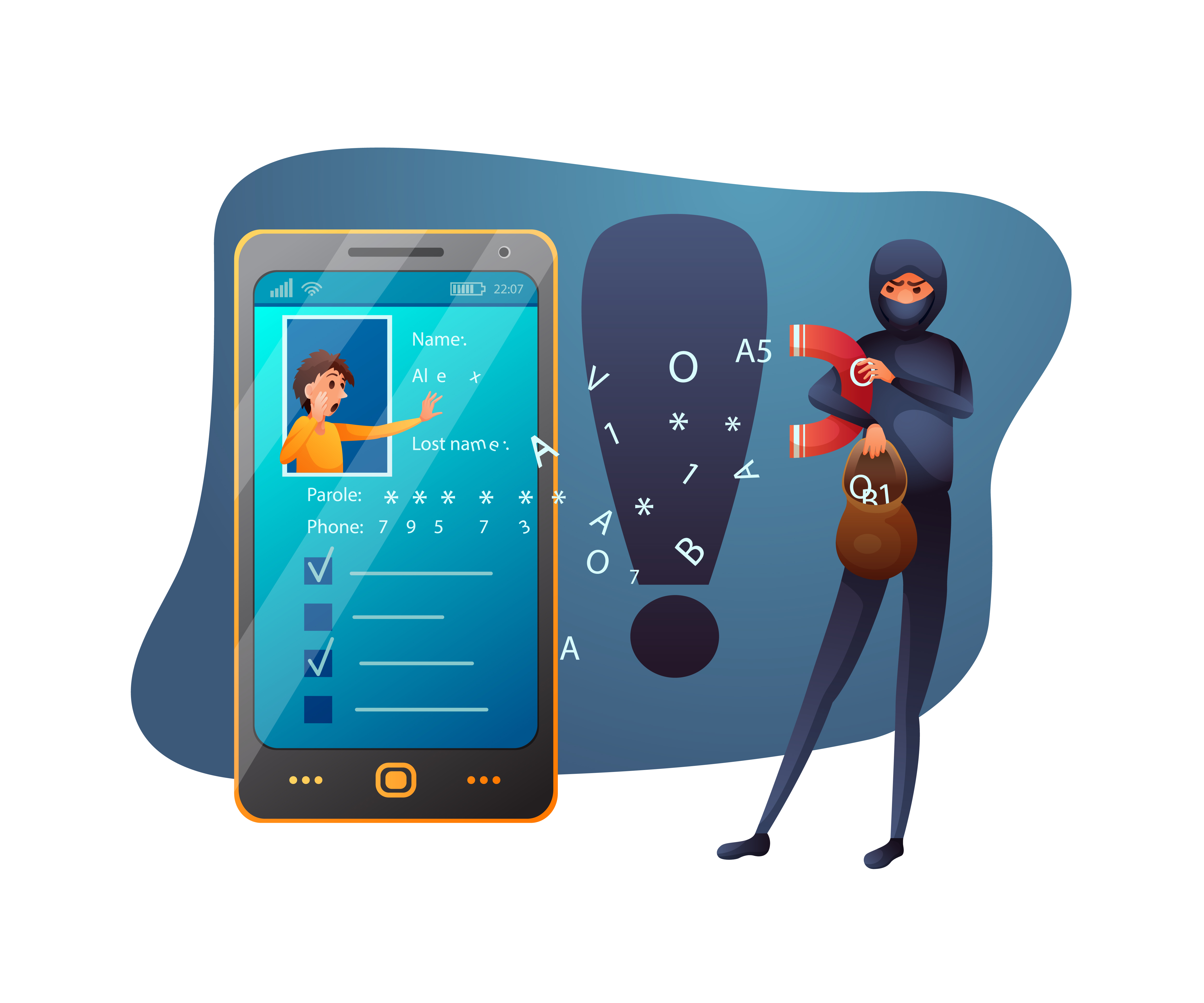
Generative AI has reached a capability threshold that is reshaping the fraud landscape across the GCC. Voice cloning technology that can replicate a person's voice from a few seconds of audio sample — available through commercial tools that cost almost nothing to access — is enabling a new generation of fraud attacks that defeat the authentication mechanisms humans have relied on for generations: the recognition of a familiar voice.
In the GCC market, where WhatsApp voice messages are a primary business and personal communication channel, where deference to authority figures is a cultural norm, and where the emotional weight of family obligation is profound, AI voice cloning and deepfake video create conditions for fraud that is both highly effective and deeply distressing to its victims. The same generative tools also raise quieter workplace risks, as covered in our guide to GenAI and ChatGPT data leakage for UAE employees. Building awareness of these technologies — across consumer, employee, and organizational audiences — is one of the most urgent security awareness needs of 2026.
The AI Fraud Technology Landscape in 2026
Voice cloning. AI voice cloning systems trained on large audio datasets can replicate a target's voice with remarkable accuracy from surprisingly short audio samples — in some cases, as little as three to five seconds of audio gathered from a social media video, a podcast appearance, or a public speech. The cloned voice can then be used to generate new audio saying anything the attacker chooses. Commercial voice cloning services — some marketed legitimately for dubbing, accessibility, and content creation — have been weaponized for fraud.
Real-time voice cloning in phone calls. More sophisticated fraud operations use real-time voice conversion tools that transform the attacker's voice into the cloned target's voice during a live phone call. This means that a person calling you who sounds exactly like your managing director, your spouse, or your son may not be them — the attacker is speaking in real time, with their voice converted to the target's voice on the fly. Defending against voice-channel deception draws on the same instincts built through vishing and smishing simulation training: verify the caller through an independent channel before acting on what you hear.
Deepfake video. Video deepfake technology can place the face and voice of one person onto another person's body in video content. While creating convincing deepfake video in real time remains technically challenging, pre-recorded deepfake video is increasingly convincing and increasingly accessible — which is why training employees to recognize AI voice and video impersonation has become a baseline awareness requirement. Deepfake video of executives, government officials, and celebrities is used in the GCC for investment fraud, fake endorsements, and corporate impersonation.
AI-generated synthetic media. Beyond voice and video cloning of real individuals, AI can generate entirely synthetic media — invented faces, invented voices, and invented video personas — that are indistinguishable from real people. These synthetic identities are used to create fake social media profiles, fake customer reviews, and fake business contacts that establish false legitimacy for fraud operations — extending the same automation that makes AI-generated phishing emails harder to detect into voice, video, and invented personas.
How Voice Cloning and Deepfake Fraud Targets GCC Individuals and Organizations
Family emergency scams. One of the most emotionally devastating fraud categories involves a voice-cloned message purporting to be from a family member in distress — "I've been in an accident," "I'm in trouble with the police," "I need money urgently, don't tell anyone." The use of a cloned voice that sounds exactly like a loved one creates a powerful emotional trigger that bypasses rational skepticism. The US Federal Trade Commission has documented scammers using AI to enhance family-emergency schemes, and the same playbook surfaces in the UAE around predictable high-emotion windows — a pattern examined in our guide to Eid cyber scams in the UAE. In the GCC, where family bonds are particularly strong and where WhatsApp is used for family communication, this attack vector is highly effective.
Corporate payment fraud via voice-cloned executives. A GCC employee receives a WhatsApp voice message or phone call that sounds exactly like their CEO or CFO instructing an urgent payment. The voice is authentic-sounding, the request creates urgency, and the employee processes the payment before verification. This attack has already caused significant losses to GCC organizations — a continuation of the trend traced in our analysis of how business email compromise has evolved in the GCC — and is increasing in frequency as voice cloning technology becomes more accessible to criminal groups.
Fake customer service calls. Attackers use voice cloning to impersonate the AI-assisted customer service voices of UAE banks, telecoms providers, and government services — calling customers with voice-cloned audio that sounds authentically like the service provider's known voice interface.
Investor fraud using deepfake endorsements. Deepfake video of prominent UAE and GCC business leaders, government officials, and celebrities has been used to create fraudulent investment promotion content — fake interviews, fake conference presentations, and fake social media posts in which real people appear to be endorsing fraudulent investment schemes.
Geopolitical disinformation using deepfake officials. Deepfake video and audio of GCC government officials and political figures has been used in disinformation campaigns — creating fabricated statements that are then distributed through social media to cause political confusion or diplomatic tension. While this primarily affects public discourse rather than individual organizational security, employees who encounter apparently authoritative video or audio statements should be aware of the deepfake possibility.
Recruitment fraud using AI-generated interviewers. AI-generated synthetic video personas are being used to conduct fake job interviews — with AI-generated "HR managers" interviewing candidates via video call for positions that do not exist. This allows fraudsters to collect personal data and advance fees at scale without the operational overhead of human-conducted fraud.
The Authentication Challenge: When You Can't Trust What You Hear or See
Traditional security awareness has long taught people to trust familiar voices and faces as authentication signals — "if it sounds like your manager, it probably is." Voice cloning and deepfake video fundamentally undermine this assumption. The training challenge is communicating this without creating generalized social paralysis — employees still need to be able to function in an environment of normal human communication.
The appropriate response is not generalized distrust of all audio and video communication — it is the establishment of specific verification protocols that are applied in specific high-risk situations.
When to apply additional verification:
- Any request involving financial transactions, regardless of the apparent identity of the requester
- Any request to take an action that deviates from established procedures
- Any communication that creates urgency and requests action before normal verification can occur
- Any request for sensitive information (credentials, personal data, confidential business information) via voice or video
- Any communication channel that was not previously established (an unexpected WhatsApp from a number you don't have saved as a known contact)
What additional verification looks like:
- Call back the requester on a number you have independently established — from your contact list, from the official company directory, or from a number you have used before to reach this person
- Ask a verification question that requires knowledge the requester would genuinely possess but that an attacker would not be able to answer — something specific to a shared experience or working relationship
- Require a second, independent channel confirmation — if the request came via WhatsApp, confirm via email using the person's known corporate email address
- For financial transactions, apply the mandatory out-of-band verification protocol regardless of how convincing the voice or video appears
Organization-Level Response to the Deepfake Threat
Update verification protocols explicitly for voice and video. Organizations should update their security policies and verification procedures to explicitly state that voice and video communications are not sufficient verification for financial transactions or sensitive actions — regardless of how convincing they appear. Written policy that names deepfake and voice cloning as the reason for this requirement helps employees understand why the protocol exists. The same out-of-band discipline taught in business email compromise prevention training applies directly to voice and video requests.
Establish and communicate shared secrets for high-stakes verification. For executives and their assistants, or for finance teams handling high-value transactions, pre-established "safe words" or shared codes — verified in person or through pre-established secure channels — provide a verification mechanism that voice cloning cannot defeat, because the attacker does not know the shared secret.
Train employees on deepfake detection indicators. While deepfake technology is improving rapidly, many current deepfakes still exhibit detectable artifacts: unnatural eye blinking, lip sync that is slightly off, unusual lighting or shadow inconsistencies, artifacts at the hairline or ear edges, and inconsistent audio quality. Training employees to notice these indicators provides a first-line detection capability, while reinforcing that perfect deepfakes are possible and that detection alone is insufficient — verification is still required.
Create a culture where challenging is normal. Employees should know that asking for verification — even from the apparent CEO — is not rude, suspicious, or insubordinate. Organizations that have established a culture where verification requests are normal and expected will find their employees both more willing to verify and more resistant to social engineering that exploits the reluctance to challenge authority.
Consumer Awareness: Protecting GCC Families from Voice Cloning Scams
While this blog primarily addresses organizational security awareness, the family emergency voice cloning scam affects GCC individuals at home as much as in the workplace. Bank employees, HR staff, and customer-facing professionals who understand this threat can share awareness with customers and communities, extending the protective effect beyond the workplace.
Key consumer awareness messages:
Establish a family code word. Families can establish a simple code word — known only to immediate family members — that can be asked for in any communication claiming to be from a family member in distress. No code word, no immediate financial response.
Hang up and call back. If you receive a distressing call from someone claiming to be a family member or authority figure, hang up and call the person back on their known number. Do not use the number that called you.
Do not transfer money under emotional pressure. Any request for urgent financial transfer — regardless of how convincing the voice, how distressing the scenario, or how insistent the caller — should trigger a pause and a call to a trusted family member or friend before any money is sent.
Regulatory and Legal Context in the GCC
UAE Cybercrime Law (Federal Decree-Law No. 34 of 2021) criminalizes the use of information technology to impersonate others and to commit fraud. Voice cloning and deepfake-enabled fraud falls squarely within the scope of this legislation. Victims of deepfake fraud in the UAE should report incidents to the eCrime portal and to the relevant police authority.
The GCC's financial regulators — CBUAE, SAMA, CBK, and others — are actively monitoring the threat of AI-enabled fraud to financial sector customers and organizations. Financial sector employees should be aware that regulatory guidance on AI fraud is evolving rapidly and that their organizations' fraud detection capabilities and customer fraud policies will need to evolve in response.
Key Takeaways
AI voice cloning and deepfake technology have crossed the threshold of practical use in fraud operations targeting GCC individuals, families, and organizations. Security awareness programs that do not address this technology leave a significant gap in employee and consumer protection. Building awareness of how voice cloning and deepfake fraud works, establishing verification protocols that work even when audio and video cannot be trusted, and creating organizational cultures where verification is normal and expected are the core investments that GCC organizations need to make in response to this rapidly evolving threat.
PhishSkill helps GCC organizations turn these verification habits into reflexes — simulating voice-cloning, WhatsApp, and deepfake-driven social engineering so employees rehearse the "pause and verify" response before a real attacker forces it. Awareness is the defense that still works when audio and video can no longer be trusted.
Related Reading
More from the Blog
View all blog articles
Phishing Simulation Results: Every Metric in Your Report Explained
A phishing simulation produces a dozen numbers, and most teams act on the wrong one. Here is what every field in your report means, and the action each one triggers.
Eid Al Fitr and Eid Al Adha Cyber Scams: How Criminals Exploit Festive Seasons in the UAE
Cybercriminals exploit Eid Al Fitr and Eid Al Adha in the UAE with phishing, fake charity fraud, BEC, and gift card scams. Here is how to defend.
Phishing Statistics 2026: 40 Numbers Every Security Team Needs to Know
Phishing remains the most common entry point for data breaches, ransomware, and fraud. These 40 statistics tell the real story of where the threat stands in 2026 — and what the data means for your program.
Ready to stop phishing attacks?
Run realistic phishing simulations and high-impact security awareness training with PhishSkill's automated platform.