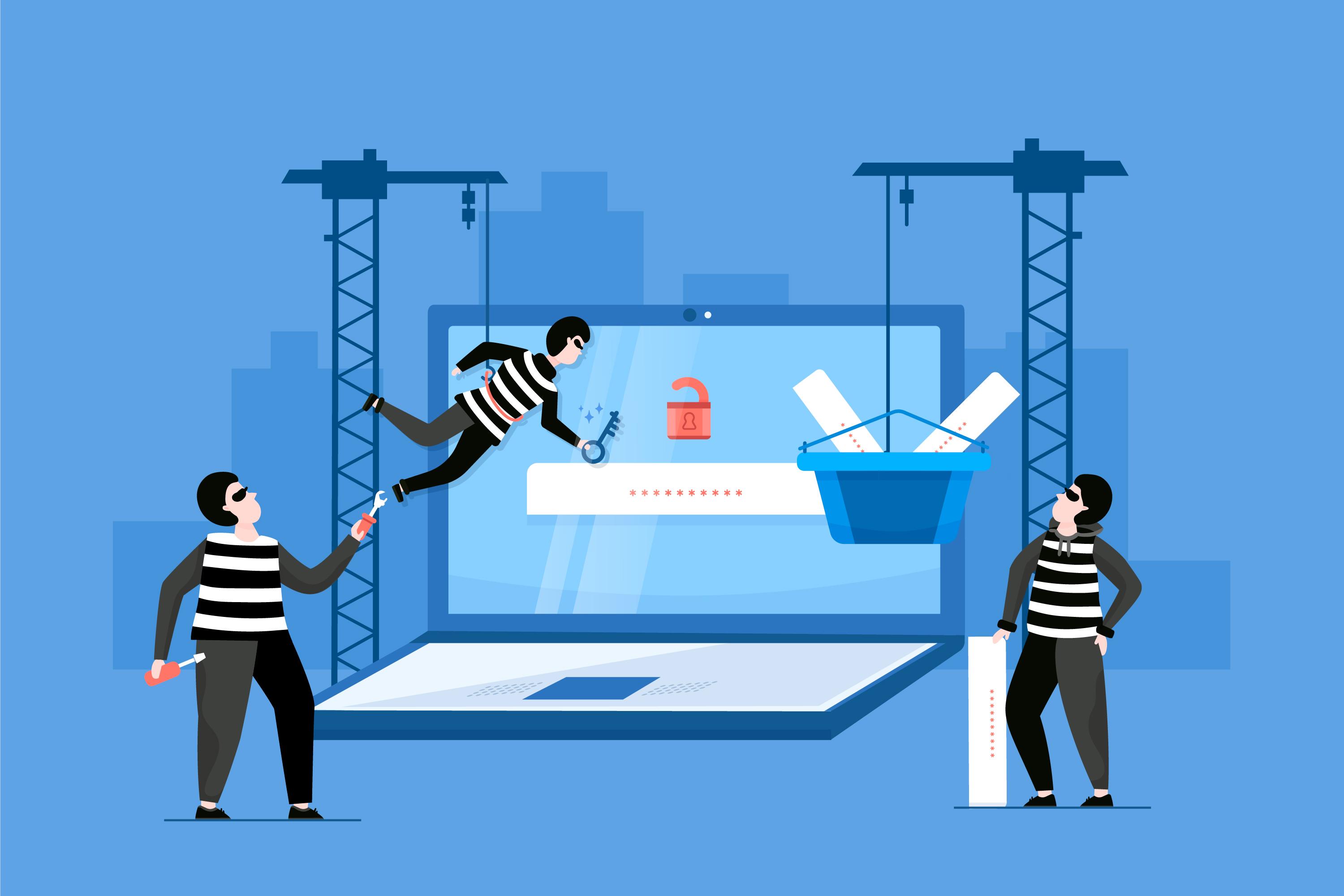
If you have spent any time researching cybersecurity programs for your organization, you have almost certainly encountered the terms "phishing simulation" and "security awareness training" used interchangeably—sometimes in the same sentence, sometimes as labels for the same product. This conflation is understandable but consequential. Treating these as synonyms leads to programs that do one thing well and leave significant gaps in the other.
New to these concepts? Read our quick explainers: What Is Security Awareness Training? and What Is Phishing Simulation?
Phishing simulation and security awareness training are genuinely different activities. They serve different purposes, operate through different mechanisms, and produce different types of value. They are also most powerful when they work together in a coordinated program rather than as independent initiatives.
This guide clarifies the distinction, explains what each approach actually does, and makes the case for why your organization needs both—not as optional supplements to each other, but as interdependent components of a complete human risk management strategy.
What Phishing Simulation Is
Phishing simulation is a measurement and behavioral conditioning activity. It involves sending realistic, controlled phishing emails to your employees—without their knowing in advance—and observing how they respond.
The primary output of a phishing simulation is behavioral data. You learn what percentage of your workforce clicks a phishing link, what percentage submits credentials when presented with a fake login page, and what percentage recognizes and reports the suspicious email. Over repeated simulation campaigns, this data reveals behavioral trends: whether phishing susceptibility is increasing or decreasing, which departments carry the highest risk, and whether specific training interventions are producing measurable behavioral change.
Phishing simulation is, fundamentally, a measurement tool and a behavioral exposure mechanism. It tells you where your organization's human risk actually lives—not where you assume it lives based on job roles or tenure. And it exposes employees to realistic phishing attempts in a controlled environment where the consequences of a mistake are learning rather than a security incident.
The exposure component matters more than many organizations appreciate. Behavioral research consistently shows that repeated exposure to a stimulus, combined with feedback about the correct response, produces more durable behavioral change than information delivery alone. Phishing simulation creates that exposure loop in a way that passive training simply cannot replicate.
What Security Awareness Training Is
Security awareness training is an educational activity. It delivers information, context, and behavioral guidance to employees about cybersecurity threats—including phishing, social engineering, password security, data handling, and a range of other topics relevant to organizational security.
Traditional security awareness training took the form of annual courses: video-based modules, slide presentations, quizzes, and completion documentation. More effective modern programs deliver training through shorter, more frequent microlearning experiences that are directly tied to behavioral events rather than scheduled on a fixed calendar.
The primary output of security awareness training is knowledge and, ideally, behavioral intent. Employees who complete good security awareness training understand what phishing looks like, why it is dangerous, what the indicators of a suspicious message are, and how to respond appropriately when they encounter one.
The limitation of awareness training, when delivered in isolation, is the gap between knowledge and behavior. Understanding what phishing is does not automatically translate into recognizing a sophisticated phishing email under real working conditions. Information absorbed in a calm learning environment does not reliably activate under the time pressure, cognitive load, and emotional triggers that characterize real phishing attacks.
This is not a failure of awareness training as a concept. It is a reflection of how human behavior actually works. Knowledge is necessary but not sufficient for behavior change—particularly in high-stakes, cognitively demanding situations.
The Critical Difference: Measurement vs. Education
The most fundamental distinction between phishing simulation and security awareness training is the difference between measuring behavior and educating about behavior.
Phishing simulation answers the question: what does this person actually do when faced with a convincing phishing attempt? Security awareness training answers the question: does this person understand what they should do when faced with a phishing attempt?
Both questions are important. Neither answer substitutes for the other.
An organization that runs only phishing simulations without any accompanying training learns a great deal about where its vulnerabilities are but provides no structured path to improvement. Employees who click simulated phishing emails repeatedly without receiving any educational content may become frustrated or resigned rather than better protected.
An organization that delivers only security awareness training without phishing simulation operates in a state of permanent assumption about whether the training is working. Completion rates and quiz scores suggest knowledge, but they tell you nothing about how employees will actually behave when a real phishing email arrives in their inbox.
The programs that produce the best outcomes—the most significant, durable reductions in phishing susceptibility—are those that use simulation and training in a deliberate, integrated cycle.
How They Work Together: The Integrated Model
The integrated model that characterizes the most effective human risk management programs uses phishing simulation as both a measurement instrument and a training delivery trigger.
Here is how the cycle works in practice:
A phishing simulation campaign is launched. Employees receive realistic phishing emails without advance notice. Their behavior is tracked: who clicked, who submitted credentials, who reported the suspicious email, who deleted it without interaction.
Employees who clicked are immediately redirected to a short, targeted microlearning module. This module explains specifically what indicators they missed in the email they just engaged with, provides a simple framework for evaluating similar emails in the future, and reinforces the correct response—reporting, not clicking. The training is delivered at the exact moment when the employee is most receptive: immediately after a concrete, personal experience of vulnerability.
Employees who reported the suspicious email receive positive acknowledgment—often automated—that reinforces the reporting behavior and signals that their vigilance was noticed and valued.
The campaign results are analyzed. Click rates, submission rates, and reporting rates are tracked and compared to prior campaigns. Departments or individuals with high-risk patterns are flagged for additional targeted training or more frequent simulation exposure.
A follow-up campaign is scheduled, typically using a different template and scenario type. The cycle repeats.
Over time, this cycle produces two simultaneous improvements: behavioral data that becomes progressively more refined and predictive, and behavioral outcomes that improve as employees develop genuine, practiced recognition of phishing signals.
Why Sequence and Timing Matter
One of the most important design decisions in an integrated simulation-and-training program is the timing relationship between simulation and training delivery.
Training that is delivered immediately after a simulation click produces measurably better retention and behavior change than training delivered days or weeks later. The behavioral science behind this is well established: learning is most effective when it is immediately relevant to a recent experience that engaged the learner's attention and emotion.
When an employee clicks a simulated phishing link and is immediately shown training that explains exactly what they missed and why it matters, several things happen simultaneously. The employee's attention is fully engaged—they are curious, perhaps slightly startled, and motivated to understand what just happened. The training content is concretely relevant to a specific experience they just had, not to a hypothetical scenario. The emotional salience of having just been "caught" by a phishing simulation creates a memory-encoding condition that abstract training rarely produces.
By contrast, training that arrives two weeks after a simulation—in a scheduled module delivered on a fixed calendar—lacks all of these conditions. The simulation experience has faded. The training content feels disconnected from any specific event. The motivation for genuine engagement is lower.
This timing principle is why the integration of simulation and training in a single platform matters. When simulation and training are managed as separate systems—a simulation tool here, a learning management system there—the just-in-time delivery mechanism is difficult or impossible to implement reliably.
The Role of Positive Reinforcement
Most discussions of phishing simulation focus on what happens when employees fail—click the link, submit credentials. Far less attention is paid to what happens when employees succeed—recognize the phishing email and report it.
This asymmetry is a mistake. Positive reinforcement of correct behavior is at least as important as remedial training following failure, and in some research contexts, more important.
Employees who report suspicious emails are performing exactly the defensive behavior that creates organizational resilience. They are also taking a risk—reporting requires effort, creates a brief moment of uncertainty about whether they are being over-cautious, and in cultures that have not explicitly encouraged reporting, can feel presumptuous.
Programs that ignore successful reporting miss an opportunity to reinforce this behavior at the moment it is most actionable. Programs that explicitly acknowledge and reward reporting—through automated positive responses, public recognition of high-reporting departments, or inclusion of reporting rates in program metrics—see measurable increases in reporting frequency over time. For a complete guide to building this capability, see our post on how to build a phishing reporting culture.
In the simulation-versus-training framing, this reinforcement loop is a third component that belongs alongside both: simulate, train on failure, reinforce on success. All three are necessary for a complete behavioral change program.
When to Start with Simulation vs. Training
For organizations that are building a program from the ground up and are uncertain whether to prioritize simulation or training first, the answer depends primarily on what you most need to know.
If your organization has no baseline measurement of phishing susceptibility and you are trying to understand where the risk actually is before designing a training program, start with simulation. A baseline campaign will tell you more about your organization's actual human risk posture than any amount of pre-training survey data. It will also establish the comparison point against which future improvement will be measured.
If your organization has experienced a significant phishing incident, is operating in a high-risk industry, or has leadership that needs concrete data quickly to justify security program investment, simulation again provides the most immediately actionable and convincing output.
If your organization has a clear compliance obligation that requires documented training completion—HIPAA, PCI-DSS, SOC 2, or similar—starting with a training deployment that produces documented completion records addresses that near-term requirement while you build the simulation infrastructure.
In most practical scenarios, the correct answer is to build both components simultaneously, accepting that neither will be perfect in the first cycle and that the program will improve with each iteration. The worst outcome is to spend months perfecting one component before introducing the other. The integration of simulation and training is what produces the most significant results, and that integration begins delivering value from the first campaign.
Common Misconceptions About the Two Approaches
Several persistent misconceptions about phishing simulation and security awareness training lead organizations to design programs that underperform.
The most common misconception is that awareness training eliminates the need for simulation. This stems from the intuitive but incorrect belief that if employees are educated about phishing, they will recognize it reliably. Education is necessary but insufficient for consistent behavioral change under real-world conditions. Simulation provides the behavioral practice and measurement that education cannot.
The second common misconception is that simulation, with its built-in just-in-time training, makes standalone awareness training redundant. This underestimates the value of broader security education—content covering password security, data handling, social engineering beyond email, and organizational security culture—that falls outside the scope of what simulation-triggered microlearning typically addresses. Simulation-triggered training is highly effective for phishing-specific behavior change. It does not replace comprehensive security awareness content.
The third misconception is that simulation is inherently punitive and will damage employee morale or trust. This is a program design and culture problem, not an inherent feature of simulation. Programs that are framed transparently, positioned as learning tools rather than tests, and designed to reward positive behavior alongside training on failure consistently produce positive employee responses. The data on employee attitudes toward phishing simulation programs is generally favorable when the program is managed thoughtfully.
Choosing a Platform That Does Both Well
The practical implication of everything described above is that the most effective programs are built on platforms that integrate simulation and training tightly—not platforms that do one well and treat the other as an afterthought.
When evaluating platforms, look for: direct integration between simulation results and training delivery, with just-in-time training triggered automatically by simulation behavior; a library of current, realistic simulation templates alongside a library of specific, scenario-matched training modules; behavioral analytics that track both simulation outcomes and training engagement over time; and a reporting infrastructure that presents simulation and training data in a unified view of organizational risk.
Platforms that keep simulation and training in separate modules—or that require manual administrator action to connect a simulation result to a training assignment—reduce the effectiveness of both components by breaking the behavioral loop that makes integrated programs most powerful.
PhishSkill is built on the integration of phishing simulation and behavior-triggered training in a single, unified platform. Because we believe the most effective programs are those where simulation and training are not just complementary—they are inseparable. Learn more on our security awareness training platform page.
Related Reading
Methodology in place? Now it's time to build. Follow our Step-by-Step Guide to Building a Security Awareness Program from Scratch or learn How to Reduce Employee Phishing Click Rates.
For official terminology, refer to the NIST Glossary: Security Awareness and Training.
New to this topic? Read our primer: What Is a Phishing Simulation?
More from the Blog
View all blog articles
Phishing Simulation Results: Every Metric in Your Report Explained
A phishing simulation produces a dozen numbers, and most teams act on the wrong one. Here is what every field in your report means, and the action each one triggers.

Deepfake Phishing: How to Train Employees to Recognise AI Voice and Video Impersonation
AI voice cloning and deepfake video have moved from research demos to operational attack tooling. The training fix is behavioural, not visual.
Average Time to Report Phishing Emails: Industry Benchmarks for Detection Speed That Actually Matters
The gap between phishing email arrival and security team notification determines damage potential. Detection times vary from minutes to days — driven by organizational design, not capability.
Ready to stop phishing attacks?
Run realistic phishing simulations and high-impact security awareness training with PhishSkill's automated platform.